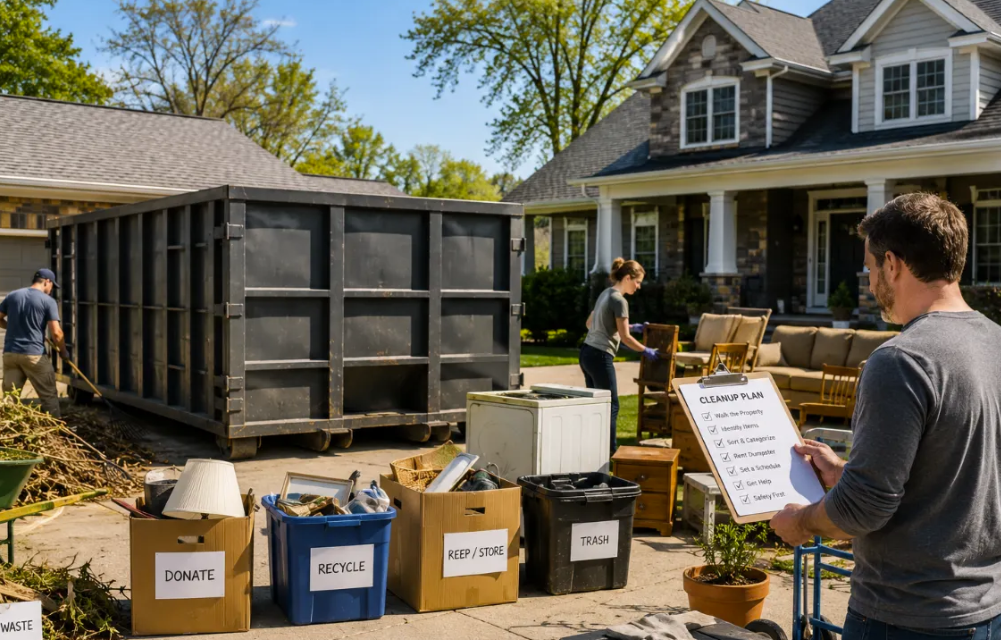
Large property cleanup projects often create more organic debris than homeowners expect. Overgrown yards, neglected fence lines, storm-damaged trees, old garden beds, brush piles, fallen branches, weeds, vines, leaves, mulch, and rotting landscape materials can quickly take over a property once cleanup begins. Even when the goal is simple, such as clearing space, improving curb appeal, or preparing for exterior work, the volume of yard-related waste can become a major part of the project.
Organic debris is different from ordinary household clutter or construction waste. It can be bulky, messy, damp, heavy, and difficult to contain if it is not managed properly. A clear plan helps homeowners keep the cleanup organized, reduce repeated handling, and prevent yard waste from spreading across areas that have already been cleared.
Start With a Property Walkthrough
Before cutting, trimming, pulling, or hauling begins, homeowners should walk the entire property and identify where organic debris will come from. This includes trees, shrubs, garden beds, fence lines, drainage areas, patios, sheds, wooded edges, and unused corners of the yard.
Some debris will be obvious, such as fallen branches or overgrown brush. Other material may be hidden beneath weeds, leaves, old mulch, or vines. A walkthrough helps homeowners understand whether the project involves light yard cleanup or a much larger removal effort.
It also helps separate organic debris from other waste that may be discovered along the way, such as broken planters, damaged fencing, old outdoor furniture, scrap lumber, or discarded household items.
Separate Yard Waste from General Debris
Large property cleanups often uncover a mix of materials. Branches, roots, leaves, grass, and brush may be mixed with plastic pots, metal edging, rotted wood, landscape fabric, broken tools, toys, and old outdoor storage items.
Keeping organic debris separate from general debris makes the project easier to manage. It also prevents the cleanup area from becoming one large, confusing pile. Homeowners who are sorting through multiple types of waste may find it useful to understand what is junk removal as a broader concept, even when the immediate project is focused on DIY cleanup and yard debris management.
A simple sorting system can help homeowners decide what is organic, what is reusable, what should be discarded, and what may need separate handling.
See also: Renovation Ideas That Start at a Home Improvement Center
Create a Central Collection Area
Organic debris spreads quickly when branches, leaves, and brush are piled in several places. A central collection area gives the project a clear direction and keeps the property from feeling chaotic.
This area should be close enough to the main cleanup zones to reduce hauling distance but placed where it does not block driveways, walkways, gates, garages, or access for equipment. Many homeowners coordinate larger cleanup projects through Waste Removal USA when organic debris and outdoor waste exceed what regular curbside service can handle.
A central collection point also makes it easier to see how much debris has accumulated and whether the cleanup plan needs to be adjusted.
Clear in Sections Instead of Randomly
Large yards can feel overwhelming if homeowners try to clean everything at once. A better approach is to work in defined sections. One area might include the front yard and curb line. Another might include side yards, garden beds, fence lines, or the back corner of the property.
Clearing by section helps homeowners see progress and prevents organic debris from being dragged across areas that have already been finished. It also makes it easier to keep tools, bags, carts, and collection piles organized.
For properties with heavy overgrowth, starting near access points can be especially helpful. This creates cleaner paths for moving debris out as the project continues.
Manage Branches and Brush Efficiently
Branches and brush often take up more space than expected because they do not stack neatly unless they are cut down to manageable lengths. Long branches can tangle together, block pathways, and make collection piles harder to move.
Cutting brush into consistent sizes can make loading and hauling easier. Larger limbs should be separated from lighter vines, leaves, and small trimmings. Thorny material should be handled carefully and placed where it will not injure anyone walking nearby.
If contractors, landscapers, or helpers are involved, everyone should know where brush belongs and how it should be stacked.
Watch for Hidden Hazards
Overgrown properties can hide hazards beneath organic debris. Homeowners may uncover holes, uneven ground, sharp branches, broken glass, rusted metal, animal nests, poison ivy, rotted wood, or old construction scraps.
Before moving aggressively through a neglected area, it is wise to clear slowly and use proper protective gear. Gloves, long sleeves, sturdy shoes, eye protection, and caution around dense vegetation can reduce the risk of injury.
Organic cleanup may look simple, but hidden hazards are common when a property has not been maintained for a while.
Keep Soil and Mulch Separate When Possible
Large cleanup projects often involve removing old mulch, soil, compost, garden edging, and plant material. These materials can become heavy, especially after rain.
If soil, mulch, and organic debris are mixed together, the pile may become harder to move and manage. Separating loose soil or reusable mulch from branches and general yard waste can make cleanup more efficient.
Some soil or mulch may be reused for low areas, garden beds, or future landscaping if it is clean and still useful. Keeping it separate gives homeowners more options instead of treating everything as waste immediately.
Plan Around Weather Conditions
Weather can make organic debris cleanup easier or harder. Dry branches and leaves are lighter and easier to move, while wet debris becomes heavy and messy. Rain can turn soil into mud, make grass slippery, and cause collection piles to break down.
Homeowners should schedule large cleanup work during a practical weather window whenever possible. If rain is expected, it may help to remove loose piles before they become soaked.
Wind is another concern. Lightweight leaves, small branches, and dry plant material can scatter if they are not contained. Keeping debris in a defined area helps prevent rework.
Protect Areas Already Cleaned
As cleanup progresses, homeowners should avoid using finished areas as new dumping zones. It can be frustrating to clear a section of yard only to drag branches or soil back across it later.
Debris routes should be planned so material moves steadily toward the collection area. If wheelbarrows, tarps, or carts are used, they should follow the same paths whenever possible.
This approach protects lawns, planting beds, patios, and walkways from unnecessary wear. It also keeps the project looking more organized from start to finish.
Coordinate Cleanup with Future Plans
Large organic debris cleanups are often connected to a bigger goal. Homeowners may be preparing for landscaping, fencing, drainage work, garden installation, exterior repairs, or a backyard redesign.
The cleanup plan should support that next step. For example, if a fence will be repaired, debris should be cleared away from the fence line. If new landscaping is planned, old roots, mulch, and plant waste may need to be removed before grading or planting begins.
Thinking ahead prevents homeowners from clearing the same area twice and helps contractors or landscapers begin work with fewer delays.
Maintain Access for Equipment and Vehicles
Large cleanup projects may require wheelbarrows, carts, trailers, compact equipment, or service vehicles. Access should remain clear throughout the project.
Gates, driveways, side yards, and loading areas should not become blocked by debris piles. If the property has narrow access points, homeowners may need to remove smaller loads more frequently rather than waiting until the end.
Keeping access open makes the project safer and helps prevent organic debris from becoming trapped in inconvenient places.
Finish With a Detailed Final Pass
Once the largest branches, brush, and piles are gone, a final pass helps restore the property. Smaller sticks, leaf piles, vines, plant tags, plastic pieces, and broken edging can remain hidden after the main cleanup.
Homeowners should check fence lines, corners, garden beds, shed areas, drainage paths, and behind outdoor structures. These are common places for debris to remain even after the property looks mostly clear.
A careful final cleanup makes the yard easier to maintain and prepares the space for whatever comes next.
Managing organic debris during large property cleanup projects requires more than cutting and piling yard waste. Homeowners need a plan for sorting materials, creating a central collection area, working in sections, protecting access routes, and adjusting for weather and hidden hazards.
When branches, brush, leaves, soil, mulch, and plant debris are handled with a clear system, the cleanup becomes easier to control. A well-managed process keeps the property safer, reduces repeated work, and gives homeowners a cleaner foundation for landscaping, repairs, outdoor upgrades, or regular maintenance.
