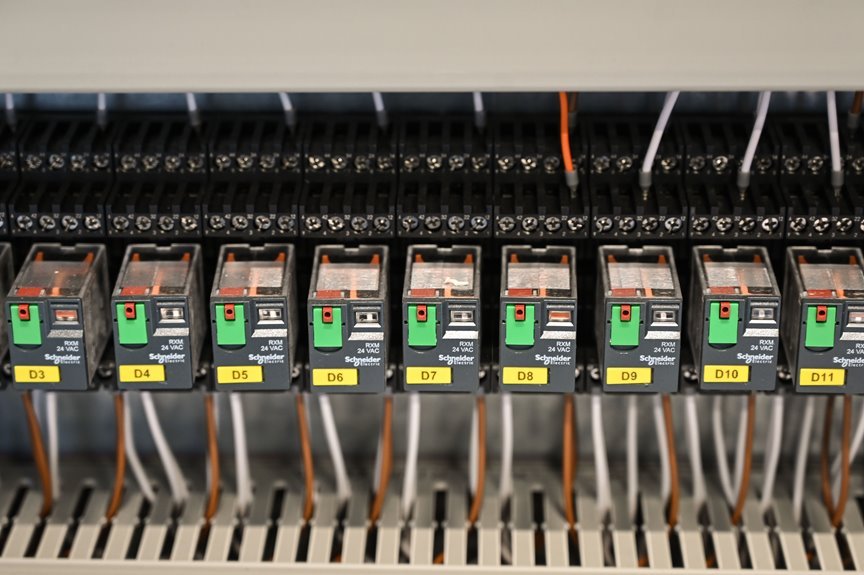
The QuantumAxis Relay Framework centers on five core modules—3298591340, 3sv9xvk, 6104103666, 4028309108, and 9472221080—that purportedly shape both transmission and control planes. The claim is modular interoperability with resilience assurances, yet hidden dependencies and latency gates invite scrutiny. A disciplined, cross-layer view is required to assess governance, privacy, and real-world deployability. Questions remain about fault tolerance guarantees and observable performance under stress, leaving the framework open to further examination and practical verification.
What Is QuantumAxis Relay Framework and Why It Matters
QuantumAxis Relay Framework is a modular protocol stack designed to optimize inter-node communication in quantum networks. It presents a structured approach to data exchange, emphasizing interoperability and control. Analysts remain skeptical about scalability and real-world deployment. The framework foregrounds privacy concerns and testing strategies, arguing that rigorous assessment is essential to prevent covert vulnerabilities while preserving user autonomy and freedom from centralized oversight.
Core Components: 3298591340, 3sv9xvk, 6104103666, 4028309108, 9472221080
The Core Components identified as 3298591340, 3sv9xvk, 6104103666, 4028309108, and 9472221080 form the foundational modules of the framework, each serving distinct functional roles within the transmission and control plane.
The assessment remains precise: components enable disaster recovery and latency optimization, yet skeptically question assumed interoperability, exposing hidden dependencies, latency gates, and potential single points of failure across modular interfaces.
Freedom implies verifiable resilience.
Architecture for Resilient, Low-Latency Relays: Routing, Handshakes, and Fault Tolerance
Can routing, handshakes, and fault tolerance satisfy the stringent demands of a low-latency relay network, or do hidden dependencies and latency gates undermine assumed resilience?
The architecture pursues latency optimization through streamlined paths and adaptive handshakes, yet fault tolerance remains contingent on cross-layer guarantees.
Skeptical scrutiny reveals brittle edges, transient congestion, and coordination costs that threaten sustained performance and freedom.
Real-World Deployment, Patterns, and Next Steps for Developers and Operators
Real-world deployment of the QuantumAxis Relay Framework demands a disciplined examination of operational patterns, integration challenges, and measurable outcomes. Practitioners assess latency optimization and fault tolerant routing under real conditions, not theory.
Patterns emerge: modular deployment, observability, and clear role boundaries.
Operators favor explicit metrics, scalable governance, and disciplined risk management.
Freedom-minded teams demand verifiable reliability, incremental iteration, and rigorous critique of assumed benefits.
Frequently Asked Questions
What Privacy Guarantees Does Quantumaxis Relay Framework Provide?
The framework offers limited, auditable privacy guarantees, emphasizing data minimization and regional deployments. It discusses licensing terms and production use, while addressing failure modes with mitigation strategies; scalability considerations and hardware integration influence deployment, licensing, and regional compliance.
How Does It Scale Across Multi-Region Deployments?
A allegory begins: a relay council scales a beacon across borders, yet faces scalability challenges, cross region latency, and privacy guarantees scrutiny; licensing terms, hardware integration, and failure mitigations temper optimism for freedom-seeking architectures.
What Are the Licensing Terms for Use in Production?
Licensing terms permit production use under enterprise terms; privacy guarantees remain contingent on selected plan. Multi region scaling and integration with hardware stacks are supported, while failure scenario mitigations are documented; terms emphasize ongoing freedom with transparent updates.
Can It Integrate With Existing Quantum Hardware Stacks?
Can it integrate with existing quantum hardware stacks? Integration viability hinges on standardized interfaces and driver support; skepticism remains about seamless hardware compatibility, potential bottlenecks, and forward-compat readiness for diverse platforms, yet freedom-seeking teams pursue versatile integration.
What Are Common Failure Scenarios and Mitigations?
Common failure scenarios include communication latency, desynchronization, and qubit decoherence. Mitigation strategies involve robust error handling, adaptive pacing, redundancy, and rigorous testing. Skepticism remains about guarantees; freedom demands continuous monitoring and iterative, data-driven refinement of protocols.
Conclusion
The QuantumAxis Relay Framework presents a modular stack built around five core components, with claimed resilience and cross-layer guarantees. However, skepticism is warranted: hidden dependencies, latency gates, and opaque governance could undermine real-world performance. Unless architectural transparency and verifiable latency metrics are established, claims risk overhang. In short, while a robust adage—“trust, but verify”—aptly applies, rigorous, observable validation remains essential before broad deployment.
